AFM in Zimbabwe Education Department Hosts Groundbreaking AI Symposium at Living Waters Theological Seminary
By Nelson Geje
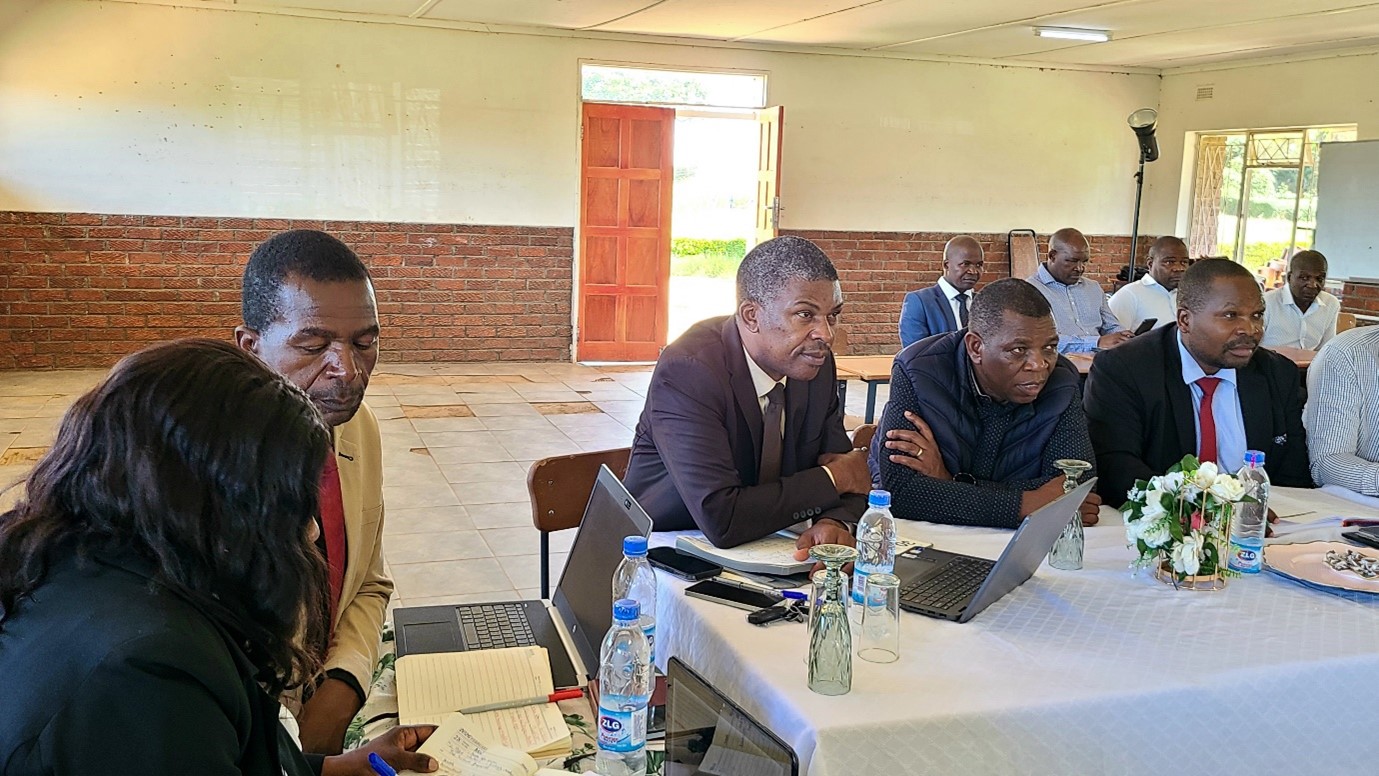
The AFM in Zimbabwe Education Department convened a high-impact Teachers’ Workshop at Living Waters Theological Seminary on Wednesday 25 April 2026, placing artificial intelligence (AI) at the centre of theological education, church growth, and leadership strategy. The symposium, aptly themed around relevance, influence, strategic positioning, effectiveness, and next-generation engagement, challenged educators and church leaders to rethink ministry in a rapidly evolving digital age.
AI as a Defining Force in Ministry
Presenters defined AI as a computing system designed to mimic human cognitive abilities such as learning, problem-solving, and decision-making. Delegates were introduced to four major categories of AI: generative, physical (embodied), predictive (analytic), and agentic AI.
The workshop emphasized that AI is not a passing trend but a general-purpose technology, comparable to electricity or money that is capable of reshaping every sector, including the church. From scientific breakthroughs like protein folding to predictive healthcare and knowledge work automation, AI’s transformative power is already evident globally, with Africa steadily positioning itself within this technological shift.
Leadership Reimagined: The Three Hats
A central theme of the symposium was the evolving role of church leadership. Leaders were urged to embrace three critical dimensions:
1. Spiritual Leadership – grounding all innovation in biblical truth,
2. Visionary Executive Function – driving strategic adoption of technology,
3. Stakeholder Engagement – building strong connections within and beyond the church community.
Speakers stressed that effective leadership in the AI era requires balancing spiritual discernment with technological competence.
Frameworks for Navigating the AI Era
The symposium introduced structured frameworks to guide churches:
The FOCUS Framework:
F – Family & Community: Addressing impacts on families, students, and employment.
O – Operational Excellence: Strengthening systems and processes.
C – Capacity Building: Equipping leaders and members with AI knowledge.
U – Universal Implications: Aligning AI use with godly values.
S – Spiritual Discernment: Maintaining sensitivity to the Holy Spirit.
The SERVE Framework:
S – Systematic Analysis
E – Engagement
R – Roadmap Development
V – Virtual Automation
E – Expert Advice
These frameworks were presented as practical tools for churches seeking to remain relevant and effective.
Understanding AI Systems and Risks
Participants explored how AI operates through tokenization—a simplified numerical representation system enabling machines to process information.
However, facilitators warned of significant risks, outlining a seven-layer risk model including misuse by bad actors, malicious AI models, unintended consequences, socio-economic disruptions, and AI-enabled warfare. The need for vigilance and ethical grounding was strongly emphasized.
Biblical Anchoring in a Technological Age
The symposium rooted AI discussions in scripture, drawing from:
· 2 Timothy 1:7 – Encouraging boldness over fear,
· Daniel 12:4 – Affirming the increase of knowledge,
· Genesis 1:28 – Mandating dominion,
· 1 Thessalonians 5:21 – Urging discernment: “Test all things.”
Delegates were reminded that the church must not retreat but engage proactively—“attack as the best form of defence”—in shaping AI’s influence on society.
Applied AI: Tools for Modern Ministry
The workshop highlighted practical AI tools for pastors and educators, including ChatGPT, Gemini, Claude, and NotebookLM. These tools were demonstrated as powerful aids in sermon preparation, research synthesis, and administrative efficiency.
A key takeaway was the power of prompting. Using the SHEPHERD model (Specific, History, Examples, Purpose, How, Expertise, Refinement, Details), participants learned how to give clear and structured instructions to AI systems for optimal results.
Church Growth in the AI Era
A major highlight was the application of AI in church growth strategies. Presenters described the “church growth funnel,” noting critical gaps such as poor follow-up, lack of structured evangelism programmes, and weak member engagement.
Statistics revealed that up to 90% of visitors fail to return due to inadequate follow-up. To address this, churches were encouraged to adopt systematic, AI-supported engagement strategies:
· Timely follow-ups within 24–48 hours,
· Multi-touch engagement (at least seven contacts),
· Automated reminders,
· Visitor-friendly programs and hospitality systems.
From trained greeters and effective ushering to personalized connections and structured follow-up calendars, the emphasis was on intentional, data-driven ministry.
A Call to Action
The workshop concluded with a strong call for churches to embrace both inspiration and operational excellence. “Inspiration without systems is dangerous,” one facilitator noted, underscoring the importance of combining spiritual fervour with structured implementation.
As AI continues to shape the future, the AFM in Zimbabwe Education Department has positioned itself at the forefront of integrating faith and technology, equipping leaders not only to adapt but to lead with clarity, conviction, and competence in the digital age.
0 Comments
Leave a Comment